
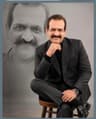

Most founders of a field spend their last decades being quoted. Richard Bandler spends his on stage. Co-creator of NLP, seventy-something, still running multi-day trainings to rooms of several hundred people, still developing new formats, still certain that he is just getting started. Whether or not you warm to his style, the working question is worth asking: what does the man who modelled everyone else do with his own decades?
The seminar machine, still running
Bandler's core business has not changed in structure since the eighties: licensed live trainings, mostly in London and Orlando, marketed through his organisation and licensed institutes. The recent calendar is recognisably his. Personal Enhancement, the long-running flagship experience workshop, Charisma Enhancement for trainers and presenters, hypnosis trainings, and his newer formats. Licensed institutes across Europe run the practitioner-level curriculum under his trademarks, and his calendar is published a year ahead. In 2026 his Neuro-Hypnotic Repatterning work is scheduled as a six-day live event in Germany, promoted as the first full NHR stage event there. The claim that he is retired can be checked against the ticket pages, and it fails.
The systems nobody talks about correctly
Two of his later systems get flattened into buzzwords, so here is the straight version.
Design Human Engineering, DHE, came out of the late eighties and nineties. Where classic NLP largely copied existing excellence, DHE is generative: instead of modelling what someone can do, it builds new circuits, deliberately designing internal experience, stacking and engineering submodalities and states into capabilities nobody demonstrated to you first. It is NLP with the copying step replaced by design.
Neuro-Hypnotic Repatterning, NHR, came later and is closer to what it sounds like: using hypnotic process to repattern at the level of state and physiology, more direct, more physical, less conversational than Ericksonian work. Bandler's own description runs along the lines of changing how the nervous system runs experience rather than negotiating with content. If NLP asked what worked and copied it, NHR asks what states are possible and installs them.
There are trademark reasons these names are spelled with the registered marks attached, and there is a substantive reason too: they are specific bodies of process, not marketing labels for generic NLP.
The books and the recorded work
The famous transcripts, Frogs into Princes, Trance-formation, Using Your Brain for a Change, are history. The later output is different in kind: Get the Life You Want and The Secrets of Being Happy (with Garner Thomson) package his later methods for a general reader, and the recorded audio programs, much of it live, carry the newer material. His recent decades are better documented on video than in print, which is why the public image of him sometimes stops around 1985.
What to make of the man
He is a difficult founder to have. The insults are real, the lawsuits were real, the co-creation dispute with Grinder was bitter and never fully resolved. Honest writing about NLP has to carry that. But the assessment should be sized correctly: the field exists because he modelled brilliantly and then kept going when it would have been easy to stop, and his later systems are genuine attempts to answer the next question rather than to relaunch the old one.
There is also a lesson in his career for anyone learning this material. He never treated NLP as finished. Every decade he broke his own formats and rebuilt them, which is the attitude of the field applied to itself: if the model stops producing, change the model. Practitioners who freeze the field in its 1979 form have missed his actual example.
If you want to go near any of this
Going to a Bandler event is possible if the travel and the ticket price are acceptable, and it is an experience worth having once for anyone serious about this field: the stage work is the live demonstration of the modelling tradition. For most learners, the practical path is a lineage that teaches the foundations properly before the showmanship matters. That is what we do in the Spirit of NLP programme: attitude, then methodology, then technique.
Continue the lineage: where the magic came from, the people who kept building, and Dilts's levels.