Somebody told you something once, and you never checked whether it was still true
That is the part I find interesting. Not that they said it (people say all sorts of things), but that you took it inside, wrapped it in your own voice, and have been playing it back to yourself ever since. And then you called it your personality.
Listen to how you talk to yourself for one day. Every time you say "I have to," that is an induction. Every time you say "it's hard to," that is a suggestion, delivered in the one voice you never think to question, by a hypnotist you have never once fired.
You are already doing this. You are simply not very good at it yet.
“
If you say to yourself "it's difficult to get up in the morning", "it's hard to cease smoking", then you are already using hypnotic suggestions on yourself.Richard Bandler
Now, notice what happens when you sit with the idea that all of it was learned. Because if it was learned, and it was, then somewhere underneath the complaining there is a mechanism. And a mechanism can be taken apart, looked at, and put back together differently.
People arrive wanting techniques. I understand the appeal.
A technique feels like a thing you can own. You put it in your pocket, you walk out of the room heavier than you came in, and for about a fortnight you feel like you learned something.
Then you try to use it on a real person in a real conversation, and it does not fit, because real people are not the volunteer from the training room. So you stop. And you tell yourself you need another course.
Here is what nobody said to you: every technique you have ever been taught is somebody else's finished homework. Somebody watched a person who was extraordinary at something, worked out what they were actually doing (not what they said they were doing, which is usually rubbish) and wrote it down.
“
NLP is an attitude and a methodology, not the trail of techniques it leaves behind.Richard Bandler
So we do this in the right order. Attitude first. Then the method. The techniques turn up in Month 3, and by then you will be faintly irritated at how obvious they have become, which is exactly the feeling I am after.
The difference
Read this column, then that one, and decide for yourself which one produced practitioners
What almost every NLP course does
What happens here
Seven days, then you are on your own.
Twenty-four weeks, so the learning has somewhere to land between the sessions.
Techniques on day one, before you can hold a state or read a face.
Techniques in Month 3, after your perception and your state are worth something.
Modelling is mentioned on the first morning and never returns.
Modelling is the spine. You finish having transferred a model to somebody who could not do it before.
The trainer demonstrates beautifully, and you learn nothing from it.
The trainer demonstrates and narrates the misses, because recalibrating in public is the skill.
You practise on invented problems with other students.
You practise on real material, in the world, for a hundred logged hours.
Nobody watches you work.
Twelve of your sessions are recorded and pulled apart by your group and by me.
Content-free work is never taught.
Clean Language, Symbolic Modelling and New Code, so you stop imposing your map on other people.
The research is avoided, and you cannot answer a sceptic.
One full session dismantling the claims that did not survive testing. I do the dismantling.
A certificate on Sunday afternoon.
No certificate. A portfolio nobody can fake.
You will notice I have not named anybody. Several of those seven-day intensives are run by excellent people, and if what you want is a credential in a hurry, go and take one, and I will tell you which. What I am saying is narrower and harder to argue with: a credential and a capability are two different purchases, and almost nobody is selling the second one.
Why come at all
Three reasons, and none of them is the certificate
You will do it, not describe it
Six months of drilling
There is a particular kind of frustration in knowing the name of something you cannot perform. Six months of drilling removes that frustration permanently, and it does not come back.
Being watched is what works
Nobody improves in private
It is also the thing you have been avoiding. Twelve recordings and a silent observer will do more for you than another eight books.
You learn how to acquire skills
The part that lasts ten years
Modelling is transferable. Once you can watch an excellent person and code what they do, you own a method for getting good at anything.
“
Flexibility comes from having multiple choices; wisdom comes from having multiple perspectives.Robert Dilts
Who should definitely be in the room
You will recognise yourself in one of these, or you will not
01
The certified practitioner who has never once used it
You did the seven days. You liked it. The folder is on a shelf and you have run perhaps two patterns since. You are not lazy; you were given the answers without ever being made to do the work.
02
The coach, therapist or healer whose clients plateau
They arrive, they feel better, they come back with the same problem in different clothes. You suspect you are working at the wrong level. You are, and by Month 4 you will know exactly which one.
03
The person who leads or sells and keeps losing the room
You can build the deck. You cannot reliably read the seven people looking at it, and you have never been taught how. This is a perception problem, and perception is trainable.
04
The complete beginner who has read everything and applied none of it
You know more NLP theory than most certified practitioners. You have also never run a single pattern on a live human. In one specific way you are better placed than everyone else here: there is less to unlearn.
05
The trainer or teacher who wants to bottle what the good ones do
You have watched somebody excellent and thought, I wish I knew what they were actually doing. That question has a method attached to it, and six months from now you will have used it.
✕
And who should not come
If a regulator or an employer needs a certificate from you, take an intensive instead; you will not get one here and I will not pretend otherwise. If you are looking for therapy, this is a training room and that would be unkind to you. And if you cannot find five hours a week for twenty-four weeks, look at your calendar before you look at your bank balance.
Who is teaching it
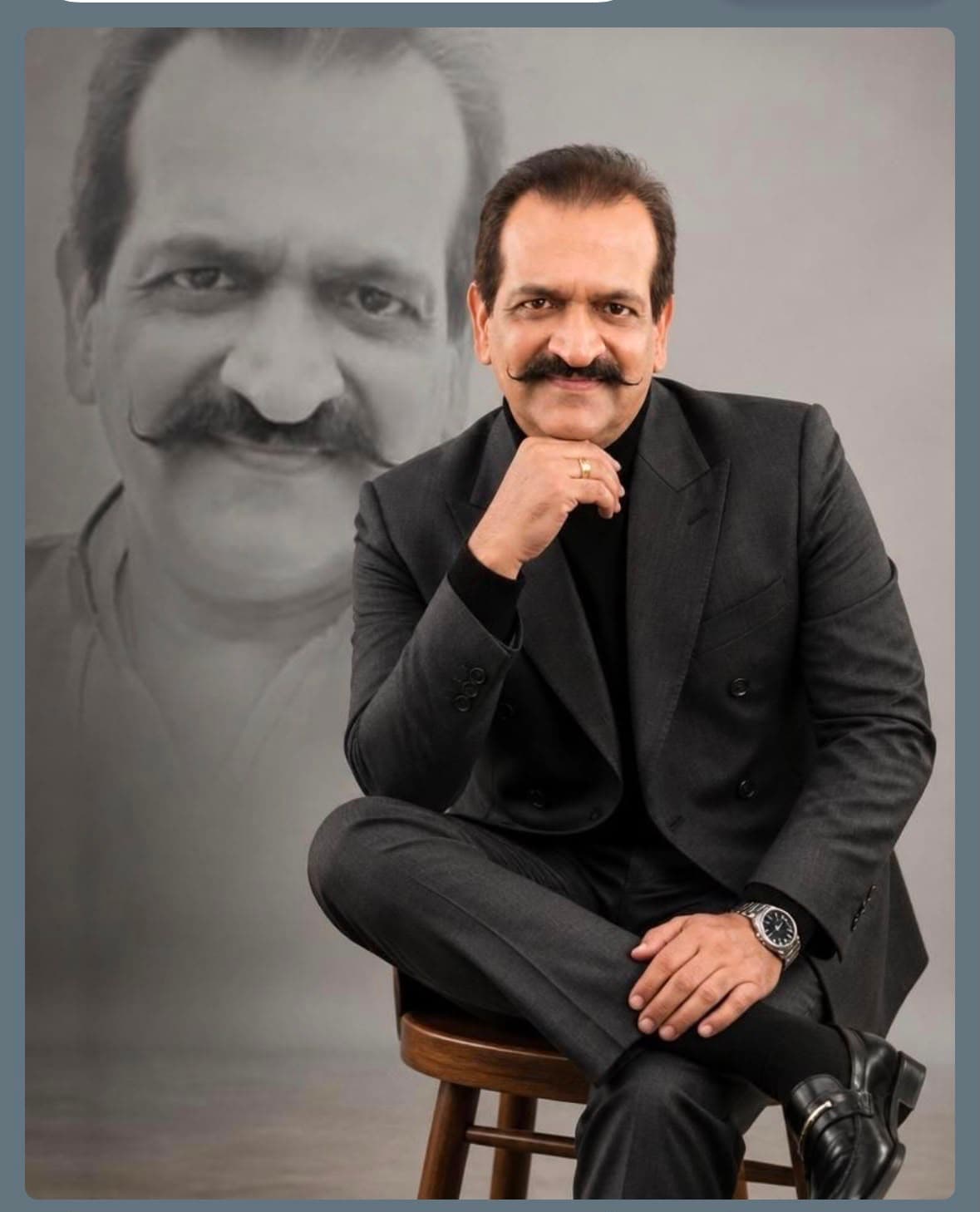
ShriViral Manek
ShriViral Manek · Founder & Lead Trainer
Certified Master Trainer in NLP by the National Federation of NeuroLinguistic Psychology, USA, twenty years ago.
Which, on its own, would tell you very little. Plenty of people have that certificate. What has happened in the eighteen years since is the part that matters: eighteen years spent going back through the core concepts rather than forward through the technique catalogue. Reading the founders in the original. Taking the presuppositions apart to see which ones hold. Watching where the models come from, and where several of them quietly fall over.
Most trainers stop studying the day the certificate arrives and spend the next two decades teaching the same seven days. This programme exists because he did the opposite, and because a certificate on the wall is not the same thing as understanding why any of it works.
20 yrs
Since Master Trainer, NFNLP USA
18 yrs
Core-concept study since
9
Books authored
IONI
Founder
The six-month learning trajectory
What each month actually does to you
Each month is a capability rather than a syllabus, and they build in only one possible sequence. Watch the mark fill as you go down: one stroke per session, twenty-four in all.
Month 1 · Sessions 1–4
The Attitude
Epistemology, state and perception. By Week 4 you will read a stranger's silent yes or no from their physiology at eight out of ten, and be quietly unsettled by how much you have walked past for thirty years.
Month 2 · Sessions 5–8
The Language
Meta Model, Clean Language, Milton Model, reframing. You stop hearing what people mean and start hearing how they built it. This is the month your ordinary conversations change without your permission.
Month 3 · Sessions 9–12
The Machinery
Submodalities, anchoring, strategies, timelines and the reconsolidation science underneath them. The techniques finally arrive, and land on perception and state that can hold them.
Month 4 · Sessions 13–16
The Self
Outcomes, parts, beliefs, identity, Core Transformation. The month it stops being professional and gets personal, and the month most people say something in their own life shifted that they had stopped expecting to.
Month 5 · Sessions 17–20
The Field
Perceptual positions, congruence, influence and its ethics, and holding a room of thirty. You deliver a public teaching act to real people. You will dread it and then want to do it again.
Month 6 · Sessions 21–24
The Modeller
You take one excellent person, absorb what they do, code it, test it by removing pieces until it breaks, and hand the result to someone untrained, and it works for them. Then you build a process with your own name on it.
After six months
It is March 2027. Let us go and have a look at you.
Somebody is sitting across from you: a client, a colleague, your own teenager, it does not matter which. They are describing a problem, and they are using words like always and can't and everyone, and something in you has already noticed the breathing change two sentences before the sentence that mattered.
You do not reach for anything. There is no folder in your head being flicked through. You ask one question, and it is the right one, and you know it was because their face changes, and you can see exactly what changed, and name it, and say why.
And here is the part almost nobody tells you about. The person most changed by all this is not your client. Twenty-four weeks of watching your own language, your own state and your own maps does something to the practitioner that no weekend can touch. People will start telling you that you seem different, and they will be vague about how, and you will know precisely how, because you built it on purpose, one week at a time.
“
There are all kinds of things we can do in this world to make it a better place but we must start with ourselves.Richard Bandler
Six months passes whether you enrol or not. That is the only genuinely certain thing on this page. The question is simply whether, in March 2027, you are the person in that first paragraph, or the person who read about them once.
The shape of it
24
Live sessions
48
Contact hours
100
Practice hours
25
Seats
0
Certificates
Two hours live, once a week, for six months. Every session you watch me work on somebody real and I talk out loud while I do it. Then you are put in a group of three and you do it yourself, while a third person sits saying nothing and writing down exactly what you did.
You will leave with a hundred logged hours, twelve recordings of yourself working, a model you built and handed on, and a process with your own name on it. A certificate says you attended. That lot says you can do it.
The arithmetic
Twenty thousand rupees is what hesitation costs
First 10 seats, or until 20 August
₹66,000
Whichever arrives first
Everyone after that
₹86,000
No exceptions, no quiet discounts
Seats at ₹66,000
That is not a pressure tactic. It is arithmetic. The people who move first carry the risk of a first cohort, so they pay less, and if I quietly gave the same price to somebody who dawdled until September, those ten would have every right to be annoyed with me.
Now, I do not know yet which sort of person you are. Some read this and book within the hour. Others sit with it for three days, tell two friends, and book on the fourth. Both are fine: both of those end up in the room.
There is a third sort. They read something like this, feel something shift, do nothing at all, and six months later feel exactly the way they do right now, only six months older. You already know whether you have done that before.
The things you are already thinking
I have already done a Practitioner course.
Good. You will move faster than the rest, and your group will learn from having you in it. Bring the certificate if you like. We will find out in Week 3 what it actually bought you.
I am a complete beginner.
Also good, and in one specific way better: there is less to unlearn. Half of what a certified practitioner arrives with has to be taken apart before anything useful can be built.
I do not have the time.
Then do not come. I mean that kindly. Two hours live and about three hours of practice a week, for twenty-four weeks. Look at your calendar honestly before you look at your bank balance.
Does any of this actually work?
Some of it works extremely well and there is decent evidence for why. Some of the claims made for NLP over the last fifty years were nonsense, and one entire session is spent taking those apart, with me doing the taking apart, not a critic. If that sentence made you trust me slightly more, you have understood the point of the course.
Can I pay in instalments?
Yes. Ask, and we will arrange something sensible. Money is a solvable problem and I would rather solve it than lose somebody who should be in the room.
Begins the first week of September 2026
You can decide now, or you can decide on the nineteenth. Just decide.
Twenty-four weeks. Twenty-five seats. Ten of them at ₹66,000, and the price steps up on the 20th of August or when the tenth one goes, whichever comes first.
One last thing. Some of what you just read was constructed rather than merely written: the phrasing, the placement, one or two things marked out in gold. You noticed some of it and not the rest, which is precisely how it works. In Month 2, you learn to do it on purpose. In Month 5, you learn when to refuse to.